Case Study: High-Volume Metal Stamping
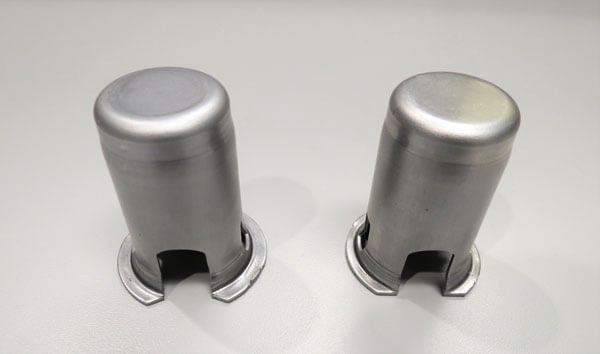
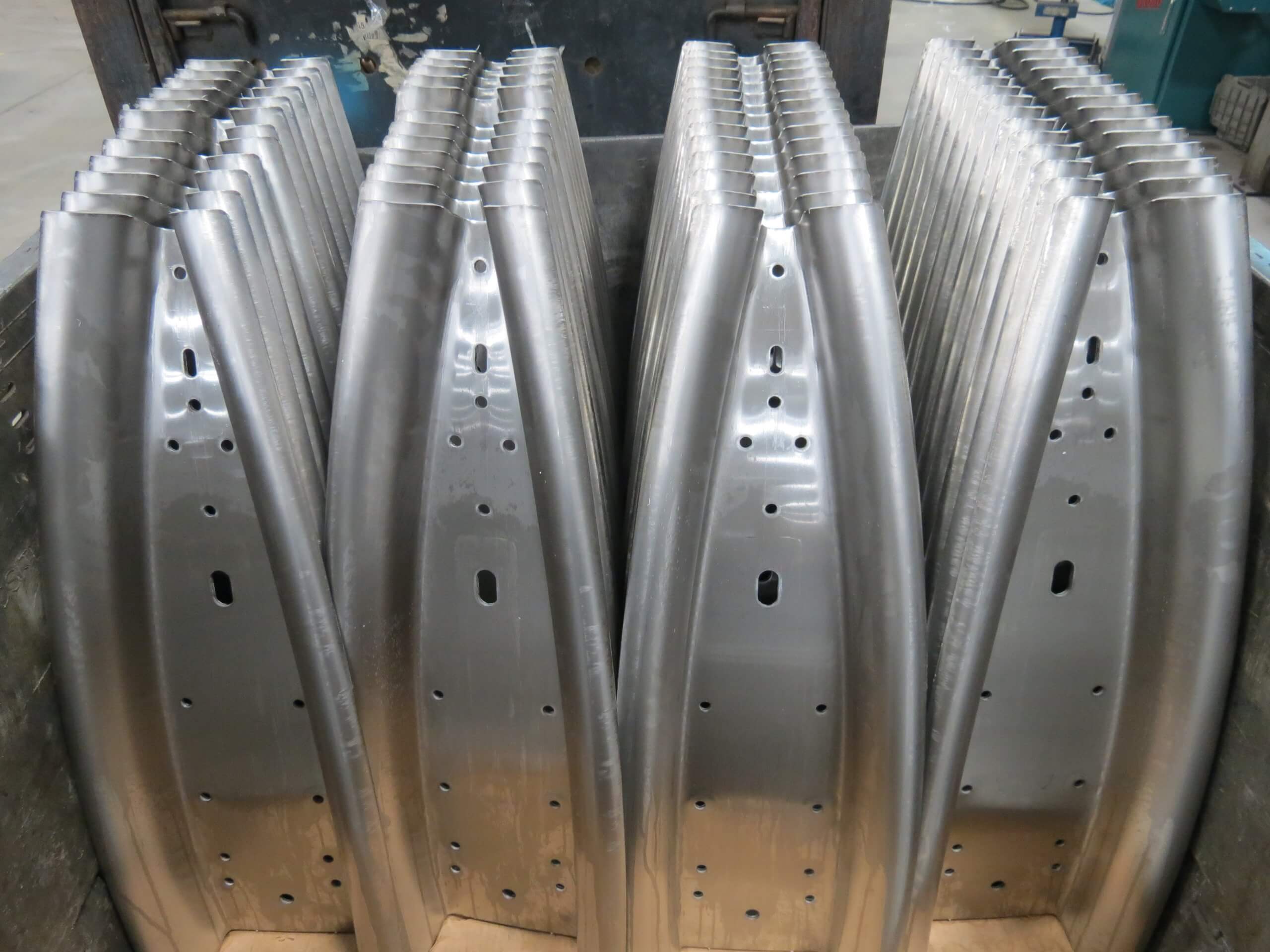
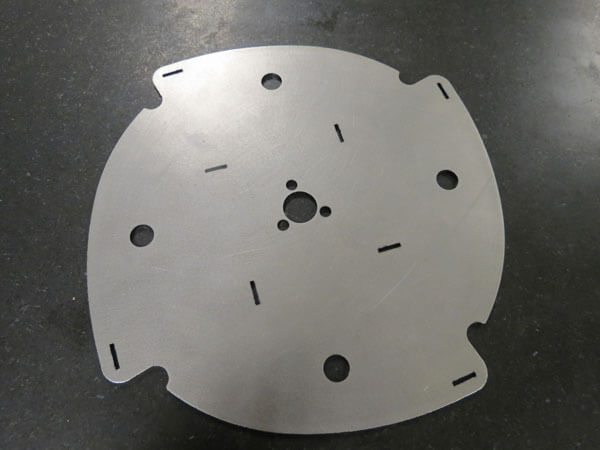
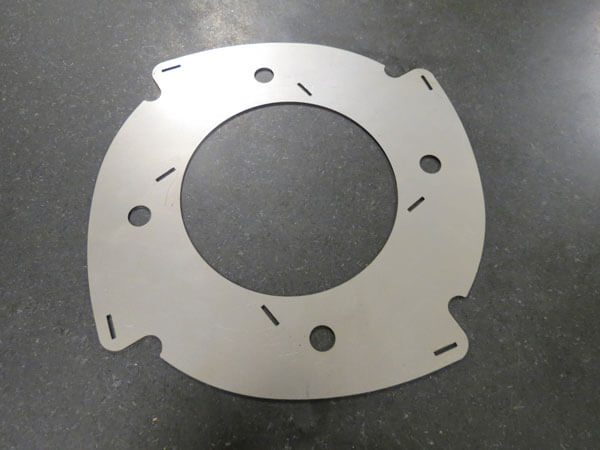
Nearly identical metal stamped shells

The customer's production needs are 600,000 – 700,00 pieces per year for FIVE different shells having a uniform shape with slight variations in each design.

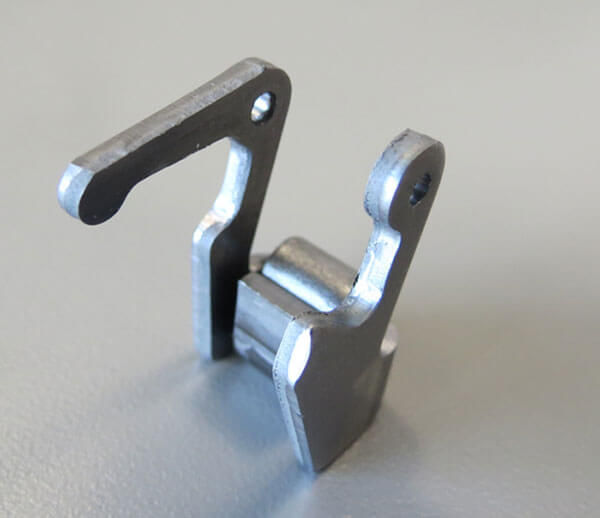
The shells shown to the left are almost identical except for the design and dimensions of their bottom lips. Previously, the customer was utilizing secondary machining to crimp the lip after stamping; and this method was expensive and extended the production time.

Ultra implemented two key changes to reduce manufacturing costs and improve production time. First, we designed and built the crimping operation directly into the customer’s progressive stamping dies, eliminating the need for secondary machining.

Second, we reduced the customer’s tooling costs by consolidating their progressive dies from five to two. This was possible due to the uniform shape and design of the shells. The final station was designed for easy changeover to one of five custom stations to complete the stamping process
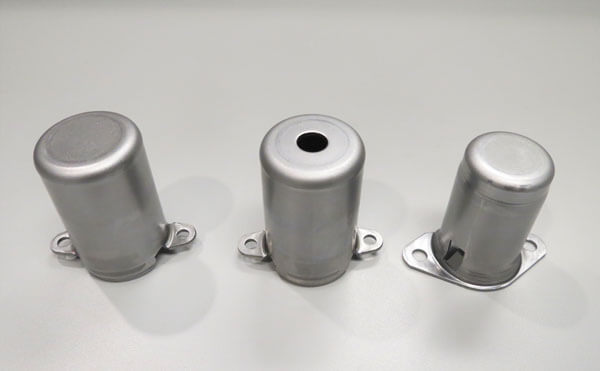
 

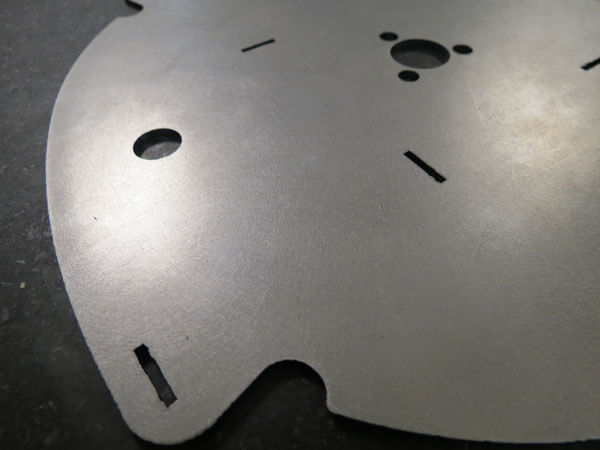
More nearly identical metal stamped shells

Case Study: Establishing Production Consistency and Minimizing Downtimes

Ultra's Solution

Customer

Global Foods Manufacturer

Tooling Die

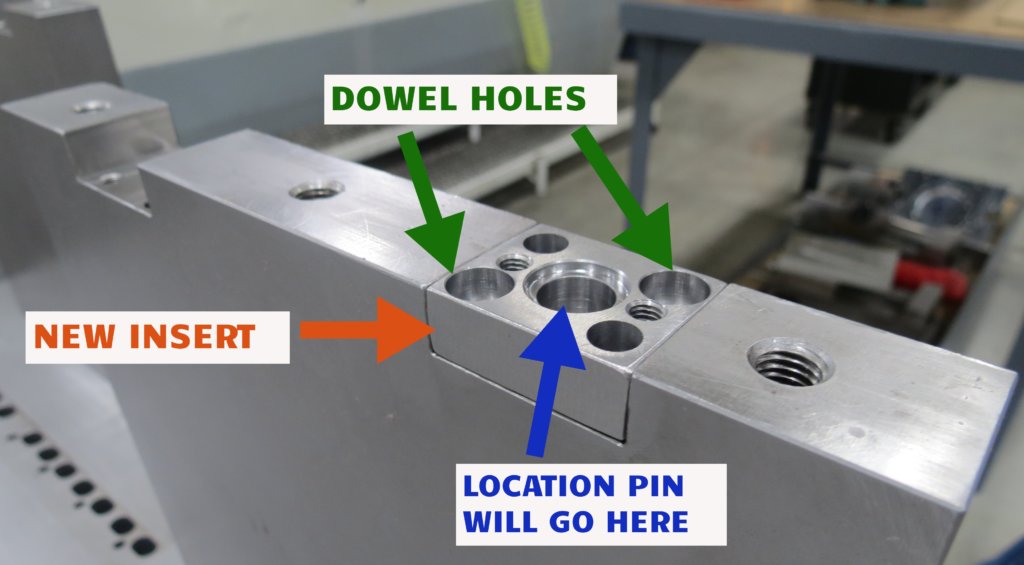
A die block with dowel holes and dowel pins on their production line tooling.

Manufacturing Issues

Time-consuming and challenging assembly and disassembly of this die block.

Damage occurring to the dowel holes and dowel pins.

Customer’s Goals

Improve the time and process to assemble and disassemble this die block on the production line.

Minimize costly damage to the dowel pins and dowel holes.

Redesign Process

Our Toolmakers and Die Designers performed a detailed assessment of the die block. They immediately recognized a weakness with the dowel pins and holes. Dowel pins, a type of industrial fastener, and dowel holes align the tooling in its proper location so that it can operate correctly on the production line. The customer's current dowel components were lacking in strength and quality. This was causing the issues the customer had continuously been experiencing on the production floor.

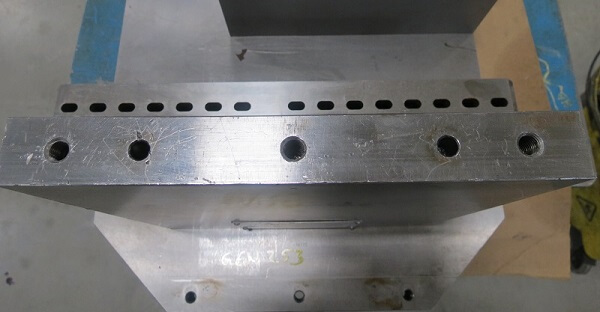
The current threaded dowel pins weren’t made to withstand constant wear and tear. They were built with a tapped hole going through the center of the pin which made them inherently weak. The flat end surface of the dowel pins also limited their ability to adjust in the hole; and this increased the scraping and washing out of the dowel holes. This dowel system established no lead-in or angle for placing and removing the tooling on and off the risers.

The image below displays the condition and design of the customer's die block with the dowel holes before Ultra got involved.

Ultra's Solution

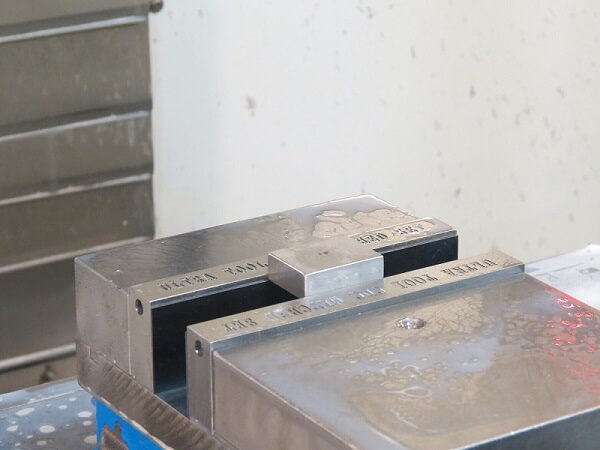
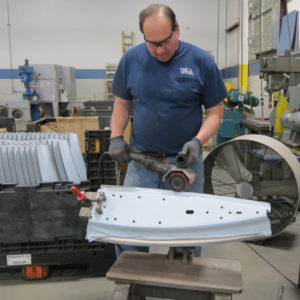
Experienced CNC Machinists utilized their technical skills, 3D design software, and our CNC equipment to precisely build this replaceable metal insert with its drilled holes. This image below shows inside the CNC where the insert is placed in an established location to ensure accurate and consistent drilling operations.

Customer Outcome

This project Introduced an easier process for assembly and disassembly of this tooling on the production line. The redesigned die block extends tooling life by utilizing robust, machined components, and it helps minimize damage to the tooling.

On-site repairs can be more easily completed by the customer because of the replaceable insert.

Ultra has since improved the dowel features on five different production tooling operations for this Global Food Manufacturer.

Other Case studies

Improving the Production Process

This customized bracket required six bends and eight holes, demanding a precise fabrication process. Ultra optimized forming, hardware insertion, and inspection to increase production rates and meet design requirements.

Read more   →
Reducing Costs with a Progressive Stamping Die

Safety‑driven design changes—including a splash guard and six drainage slots—made the customer’s existing tooling unusable and increased production costs. Ultra engineered a new progressive stamping die that reduced cost per part while ensuring all added features maintained the full functionality of the fuel filler cup.

Read more   →
Outdoor Power Equipment Metal Stamping Case Study

Manufacturer of Rotary Lawn Mower Blade Sharpeners and Balancers for the Outdoor Power Equipment Industry

A recommendation from their previous supplier brought Outdoor Power Equipment Manufacturer’s leaders, Gerd & Erik Bauer, to Ultra’s front doors to continue production of their lawn mower blade sharpener.

Read more   →
Prototyping to Production

A successful transition from a two-piece welded assembly to one-piece aluminum frame with 21 hardware insertions required the manufacturing expertise of our Die Designers and Toolmakers.

Read more   →
Meeting Design Challenges

The tabs on this lock washer were not forming correctly leading to production delays. Prototyping established a feasible manufacturing process that could metal stamp this part and its tabs to the design print.

Read more   →
Case Study: Delivering Quality with Innovation

Breather Cover

Customer

Power Equipment Manufacturer

Part

Breather Cover

Manufacturing Issues

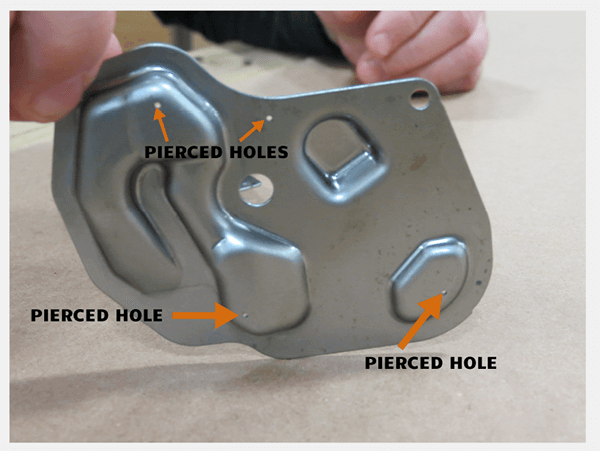
Find a method to pierce the part’s four small holes without damaging either the progressive stamping die or the formed breather cover.

Meet increasing production quantity demands year over year.

Customer’s Goals

Minimize the risk of damaging the breather cover and the tooling die during metal stamping.

Deliver the part to match its design print.

Continuously meet production quantities that are predicted to increase from year to year.

Manufacturing Process

The four small pierced holes labeled in the image are smaller than the actual material thickness. This presents a problem because the continued force of the punch going through the material creates a higher probability of the punch breaking off or becoming off target. Three of these four holes are on non-flat surfaces which also makes the piercing operation more challenging.

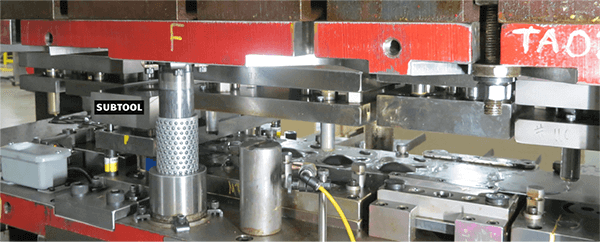
Design and build a subtool for this piercing operation in the progressive stamping die. This design presents two key benefits.

  1. The subtool in the stamping die keeps the piercing operation separate;
    localizing the force of the punch to this specified area. Then the remaining
    stations on the tooling die strip aren’t at risk of damage during
    production. This also helps keep the entire die strip aligned in the correct
    position from operation to operation during production.
  2. This provides our Toolmakers the ability to efficiently remove the
    subtool if needed to perform adjustments or repairs in Die Maintenance.
    And the subtool can easily be placed back in the correct location on the
    progressive stamping die.

After the piercing operation is completed, a bubble of material is created
and then formed to match the other designed features of the breather
cover.

Breather Cover Subtool

Customer Outcome

Within the first month of production, we were meeting production demands at 2,000 parts per hour without removing the subtool for repairs or adjustments.

The holes of the breather cover are checked with a customized gauge to verify their placement and inside diameters.

Other Case studies

Improving the Production Process

This customized bracket required six bends and eight holes, demanding a precise fabrication process. Ultra optimized forming, hardware insertion, and inspection to increase production rates and meet design requirements.

Read more   →
Reducing Costs with a Progressive Stamping Die

Safety‑driven design changes—including a splash guard and six drainage slots—made the customer’s existing tooling unusable and increased production costs. Ultra engineered a new progressive stamping die that reduced cost per part while ensuring all added features maintained the full functionality of the fuel filler cup.

Read more   →

Outdoor Power Equipment Metal Stamping Case Study

Manufacturer of Rotary Lawn Mower Blade Sharpeners and Balancers for the Outdoor Power Equipment Industry

A recommendation from their previous supplier brought Outdoor Power Equipment Manufacturer’s leaders, Gerd & Erik Bauer, to Ultra’s front doors to continue production of their lawn mower blade sharpener.

Read more   →

Prototyping to Production

A successful transition from a two-piece welded assembly to one-piece aluminum frame with 21 hardware insertions required the manufacturing expertise of our Die Designers and Toolmakers.

Read more   →

Meeting Design Challenges

The tabs on this lock washer were not forming correctly leading to production delays. Prototyping established a feasible manufacturing process that could metal stamp this part and its tabs to the design print.

Read more   →

Case Study: Producing a Robust and Precision Metal Part

Box lug with locking feature

Customer

Industrial Deaerator Manufacturer

Part

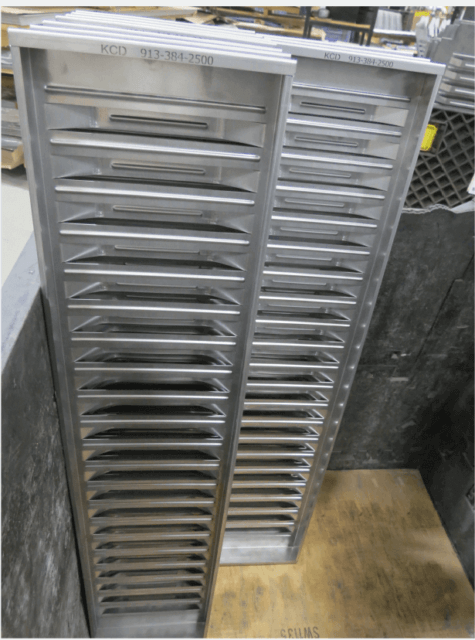
Water Tray

Manufacturing Issues

Current design has been in operation for decades and is no longer functioning at an optimal level.

Too much time and money is being utilized doing temporary modifications which are compromising the strength, durability and quality of this industrial part.

Customer’s Goals

Select a supplier to test the strength and durability of a redesigned water tray that is continuously exposed to water, oxygen, and carbon dioxide.

Utilize this same supplier to establish a quality, robust manufacturing process.

Testing Process

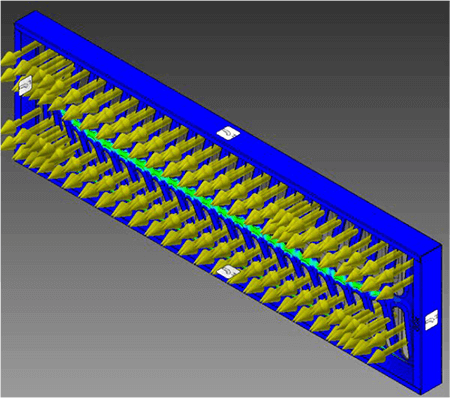
The customer designed "an island" between the rows of slots to establish better strength in the water tray. Ultra performed a stress test analysis utilizing FEA (Finite Element Analysis) simulation software. This identifies areas with high levels of stress so that we can reduce as needed. As shown in the image below, the green-colored area indicates the newly designed "island" contained high levels of stress and this was unacceptable.

Water Tray Island

A newly designed tray needed to reduce the centralized area of stress while maintaining the functionality of the water tray. Per the customer's request, this meant minimal changes to the overall form and dimensions of the tray as it needed to fit in the deaerator equipment.

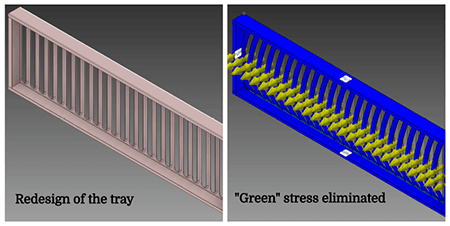
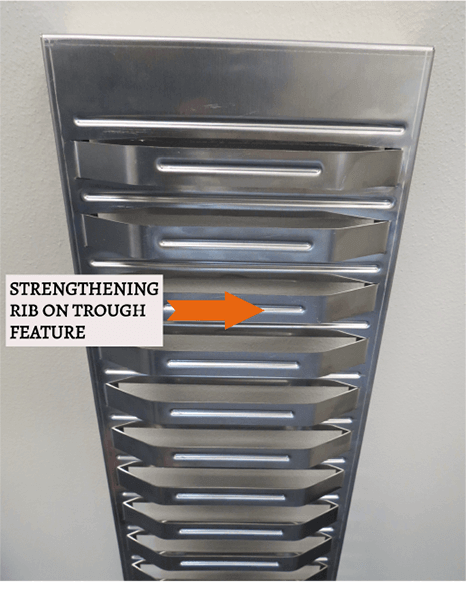
Ultra removed the designated "island" and added in troughs with strengthening ribs to keep their shape. A new stress test provided evidence that this design was feasible as shown in the image below.

Water Tray Redesigned

Stretching the stainless steel to .400 of an inch without snapping or breaking off the troughs would be the most challenging aspect to attain during production. The stainless steel would need to be stretched with perfect timing and distributed equally throughout the forming process. The final manufacturing process was finalized during prototyping.

Prototyping Process

The final prototype determined for the troughs to form correctly the tray needed to be completely flat so that as much material as possible could be pulled. This was followed by the sides of the tray being formed up to match the new design print.

Strengthening Rib

Manufacturing Process

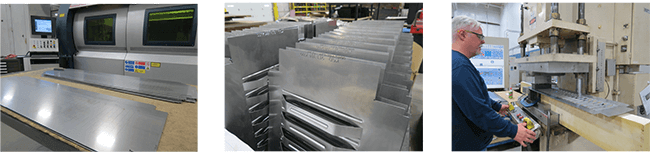
Fabrication - Laser cut slits and overall form of the tray.
Tool & Die - Designed and built a stamping die for the hydraulic press.
Metal Stamping - Troughs and ribs are formed during this operation.
Press Brake - Sides of the tray are formed up utilizing eight bends in this final step.

Tray Manufacturing Process

Customer Outcome

A feasible manufacturing process was established utilizing one supplier to achieve greater consistency, quality, and cost-savings.

The redesigned water tray meets the required standards for industrial performance and has the strength and durability needed for long‑term use.

Other Case studies

Improving the Production Process

This customized bracket required six bends and eight holes, demanding a precise fabrication process. Ultra optimized forming, hardware insertion, and inspection to increase production rates and meet design requirements.

Read more   →

Reducing Costs with a Progressive Stamping Die

Safety‑driven design changes—including a splash guard and six drainage slots—made the customer’s existing tooling unusable and increased production costs. Ultra engineered a new progressive stamping die that reduced cost per part while ensuring all added features maintained the full functionality of the fuel filler cup.

Read more   →

Outdoor Power Equipment Metal Stamping Case Study

Manufacturer of Rotary Lawn Mower Blade Sharpeners and Balancers for the Outdoor Power Equipment Industry

A recommendation from their previous supplier brought Outdoor Power Equipment Manufacturer’s leaders, Gerd & Erik Bauer, to Ultra’s front doors to continue production of their lawn mower blade sharpener.

Read more   →

Prototyping to Production

A successful transition from a two-piece welded assembly to one-piece aluminum frame with 21 hardware insertions required the manufacturing expertise of our Die Designers and Toolmakers.

Read more   →

Meeting Design Challenges

The tabs on this lock washer were not forming correctly leading to production delays. Prototyping established a feasible manufacturing process that could metal stamp this part and its tabs to the design print.

Read more   →

Case Study: Forming a Metal Part with the 800-ton press

31 ½ inches, 54 pounds Ramp

The edge quality of the ramp is of critical importance for it to correctly operate on the elliptical equipment; and it can also be clearly seen by the end-user. A detailed finishing process is followed to ensure the edges are smooth and meet cosmetic standards.

  • Deburring of sharp edges.
  • Polishing of edges with hand sander.
  • Washing the ramp in hot, soapy water and drying with microfiber cloth.
  • Removing the protective coating for final assembly.


Deburring a metal stamped part

Watch the 800-ton press stamp this heavy-duty metal part.

Case Study: Die Maintenance Services

A security systems manufacturer was finding it difficult to perform scheduled preventative maintenance on its metal stamping dies for two main reasons.

  1. Decreasing workforce
  2. Increasing inventory of dies

These issues were causing a decline in the precision and quality of service performed on their stamping dies. The customer needed a tool & die partner capable of handling both the volume and variety of their dies—providing consistent preventative maintenance as well as support for unexpected service issues. With more than 50 years of die-building experience, five toolmakers dedicated exclusively to die maintenance, and the resources of a full-service tool room, Ultra was selected to support and service their stamping dies.

Service

Die Maintenance Service
  • Clean the tool
  • Inspect all components for wear and damage (cutting, forms, strippers, pilots, etc.)
    • Dull components are sharpened and shimmed back to the correct heights.
    • Forms are polished.
    • Forms and components that are worn or can no longer be repaired to their original state are changed out
  • Dies with nitrogen springs are checked for pressures and if needed they are drained and refilled.

Reassembling a stamping die in the correct manner is of critical importance to return to high-quality and consistent production. Clearances are also re-checked to ensure there will be no issues once metal stamping resumes at their manufacturing facility.

The length of the die and the number of components determine the repair time.  Standard turnarounds have been set with this customer to keep their production running as scheduled.  Modifications can be made when production emergencies arise; such as unexpected breakdowns and rush orders.  For example, we were able to return a serviced stamping die back to their manufacturing facility within two days.

Customer Outcome

Small dies on average takes 8 hours to service
Large dies on average takes 20 hours to service
  • Small dies on average takes 8 hours to service.
  • Large dies on average takes 20 hours to service.
  • These times are based on dies ranging from 24” to 96” in length.

Case Study: Providing Innovative Tooling Dies

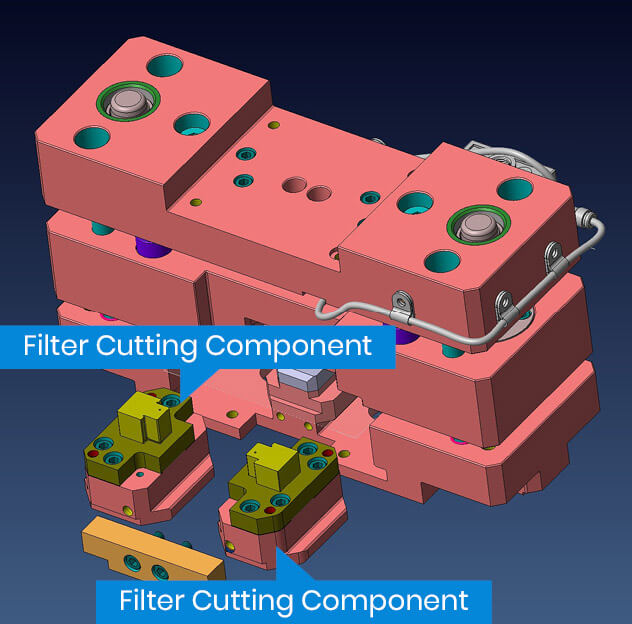
This customer needed a different design intent for the filter cutting component of a die utilized in an existing assembly machine.  The current design was causing cutting and maintenance issues; leading to a decrease in the quality and consistency of their final product.

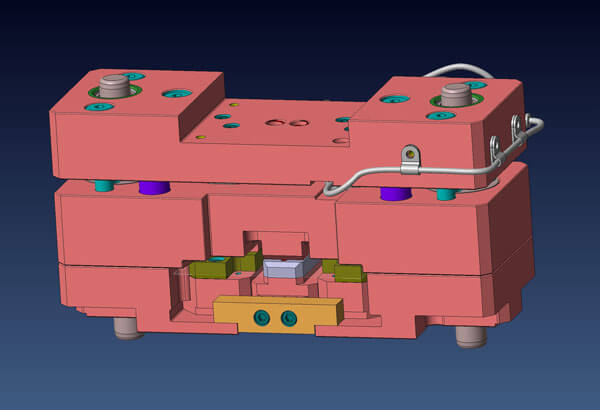
Our design team reengineered this die and the cutting component with a focus on improving the cutting action and the component’s accessibility for maintenance and changeout.

The new design consolidated multiple pieces into a single component. During the redesign, it was critical to maintain the quality and precision of the filter-cutting operation. Our team evaluated the function of each original piece to determine what could be modified and how its position affected performance. The resulting one-piece design offers a more compact shape that makes maintenance and changeout easier and faster. The customer now replaces the component by removing just two bolts instead of disassembling several parts, making realignment simpler, more precise, and allowing the equipment to return to operation with minimal downtime.

Customer’s Assembly Machine Die

Filter Cutting Components

Case Study: Customizing Parts with Metal Fabrication

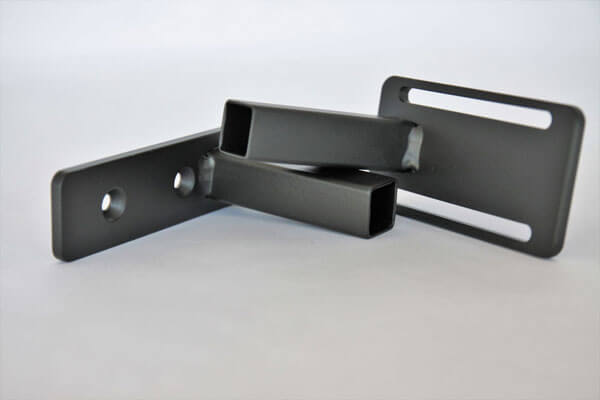
This customized, low-volume project combined the precision of our fiber laser cutter with the hands-on capabilities of our cut-off saw.

Ultra manufactured six unique components for the customer, each produced to exact measurements.  The component pieces consisted of either a base plate or a tube.

  • The three base plates were laser cut with specific geometries based on their final position in the finished assembly.
  • The three tubes were cut to different lengths to ensure proper alignment once assembled.

By providing interchangeable components, Ultra enabled the customer to configure the parts in multiple ways for their final product. This approach reduces costs when design changes arise and increases overall flexibility.

Welding the base and tube together was critical to ensure the functionality and fit were attained as designed.  A customized fixture was designed and built to better stabilize the components during the welding process, resulting in greater precision and improved weld quality.

Two parts made from the various components

An example of two parts made from the various components.

Case Study: Precision Metal Fabrication Components

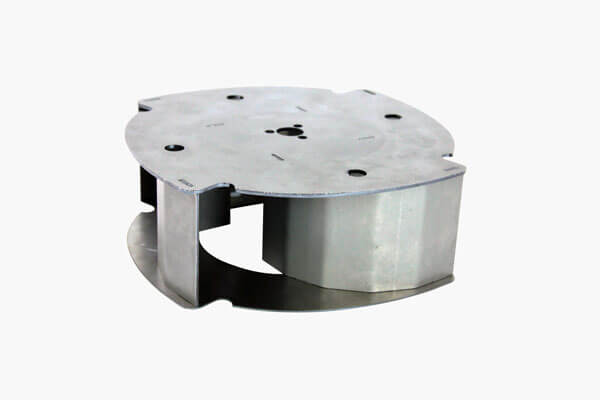
Fabricated Metal Part

Blade Production

The customer designed the fan blades with four individual bends to improve airflow during operation and to take advantage of standardized press-brake tooling rather than more expensive custom tooling
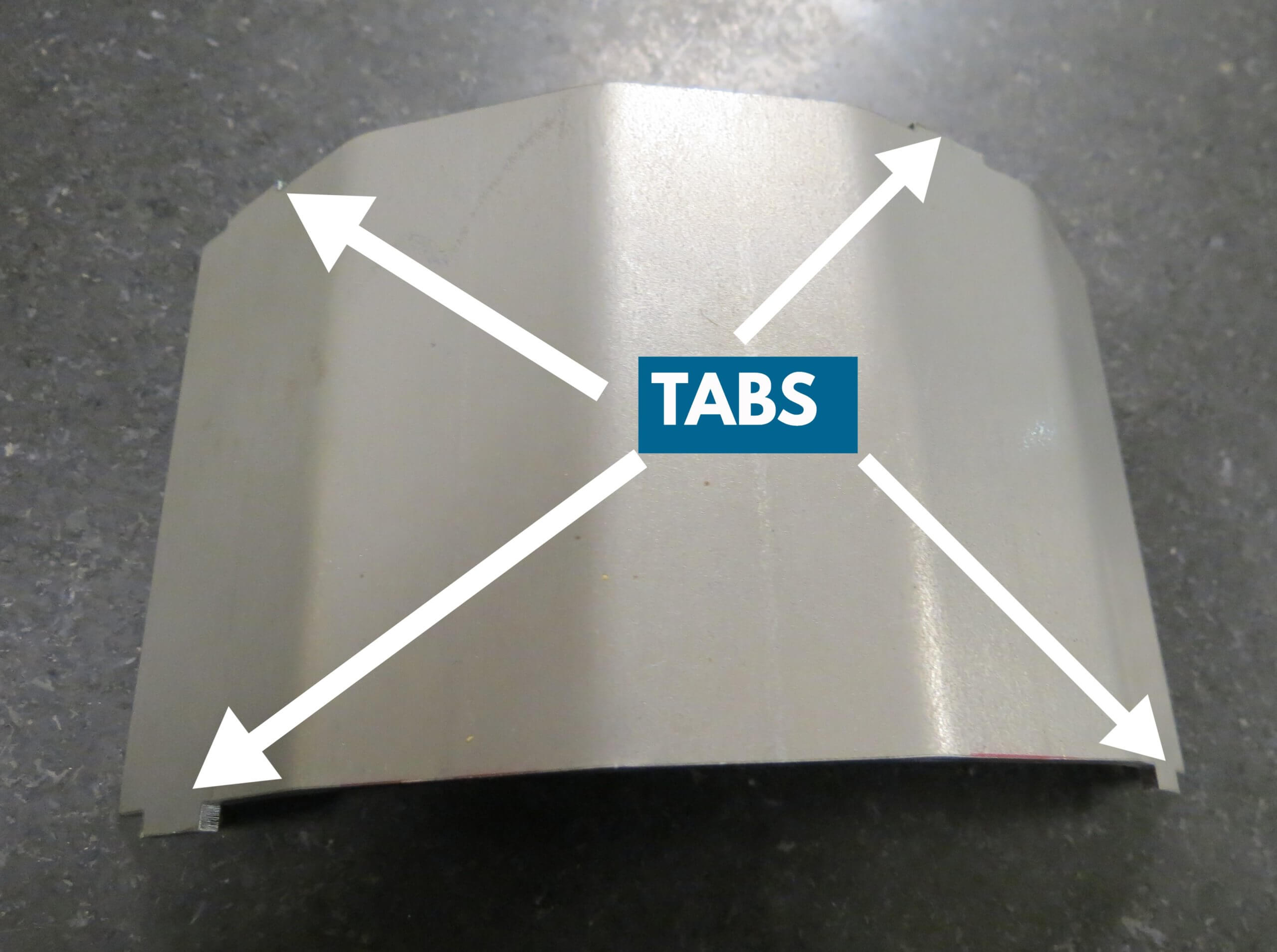
The blades present two key challenges to manufacture as designed.

1. Managing the overbends and underbends that naturally occur in materials during metal forming.
2. The exact placement and size of the four tabs on each blade. These tabs are critical to successfully align with the slots on the disk.

Utilizing the capabilities of the CNC press brake, our Fabrication Technicians consistently apply their material knowledge and manufacturing experience to match the blade's design print.


Blades with tabs

Disk Production

The most critical feature in laser cutting these disks is the slots. Their placement needs to be exact and within a tight tolerance to ensure correct alignment with the blade’s four tabs.

Using Ultra’s prototyping standards, we established the correct fiber-laser programming before final production. We then verify accuracy with regular quality checks, including set-up and in-process inspections, to ensure every blade matches the design print.


Customer Outcome


Case Study: Meeting Weight Requirements for a Metal Part

Small Engine Metal Stamped Part

Customer

Engine Manufacturer

Part

Governor Weight

Manufacturing Issues

  1. Unable to consistently attain the specified gram weight of this integral engine part.
  2. Unable to accurately produce this part with both legs in their designed position

Customer’s Goal

  1. Select a supplier that can consistently manufacture the governor weights to the design print and meet the weight specifications.
  2. Establish an inspection system that ensures defect-free parts are delivered to their production facility.

Manufacturing Process

Material thickness was key to controlling the weight of the part and this is a challenge because of the natural variation that occurs in metals. Ultra established two methods to control this variation and meet weight requirements.

  1. Utilize tighter tolerance material to minimize the degree of variation.
  2. Ultra's Die Designers developed a plan that allowed for an adjustment in the stamping die to ensure the correct weight was attained during production. The tab feature on the governor weight, located between the two legs, can have its length changed to meet the required part weight.


The second phase of this manufacturing process focused on establishing a productive and low-cost method to verify the weight of the parts and inspect each leg. A team of designers, engineers, and toolmakers designed and built an innovative Governor Sort Machine. This is an automated process that precisely inspects 1,000 parts per hour.

  1. Governor weights are introduced into the inspection system through a large bowl feeder. This process verifies the two legs are positioned correctly by aligning the governor weights as they would be placed in an engine. A governor weight identified as a defect is removed immediately.
  2. The approved parts then move on for weight verification. One by one each part is placed on a scale in an enclosed area; removing defective parts as needed. Acceptable governor weights are then packaged for delivery.


Customer Outcome

Currently, we metal stamp and inspect 700,000 of the governor weight components each year.

For over a decade, this automated inspection process has been ensuring defect-free parts are delivered.

We produce and inspect two additional parts from this manufacturer with a similar design, including the leg features and weight requirements.


Case Study: Robotic Welding for a Metal Stamped Part

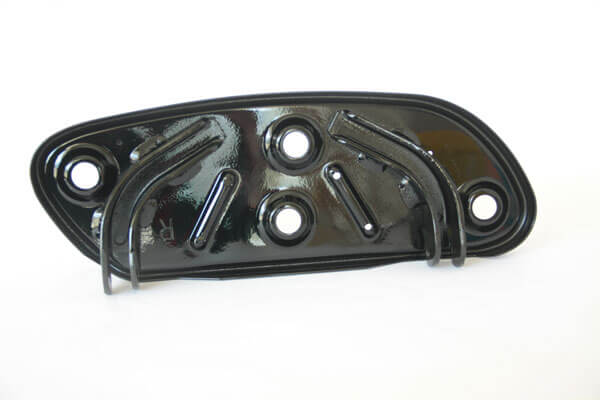
Robotic Welded Footboard

Customer

Motorcycle Manufacturer

Part

Footboards

Manufacturing Issues

  1. The increasing variability when welding the hinges onto the footboards was risking the functionality and quality of the part.
  2. Manufacturing costs were growing to an unacceptable level as production quantities continued to increase.

Manufacturing Solution

Robotic welding delivered consistent, high-precision welds while meeting the manufacturer’s increasing production demands. Unlike manual welding, the robotic arm operates with exact repeatability, eliminating human variability. Once programmed, it maintains a steady weld pace that improves quality and significantly increases production output.

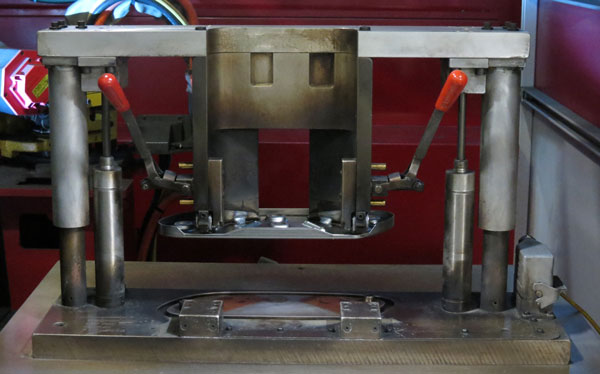
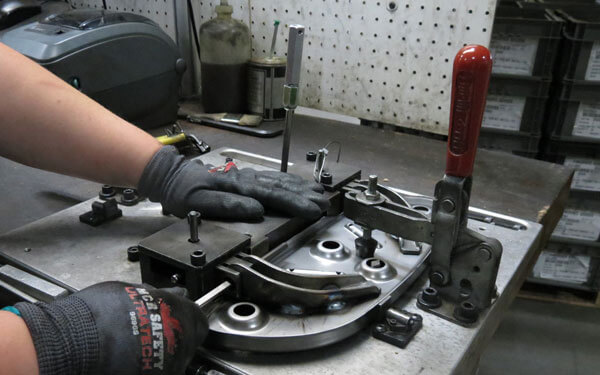
Customized welding fixture

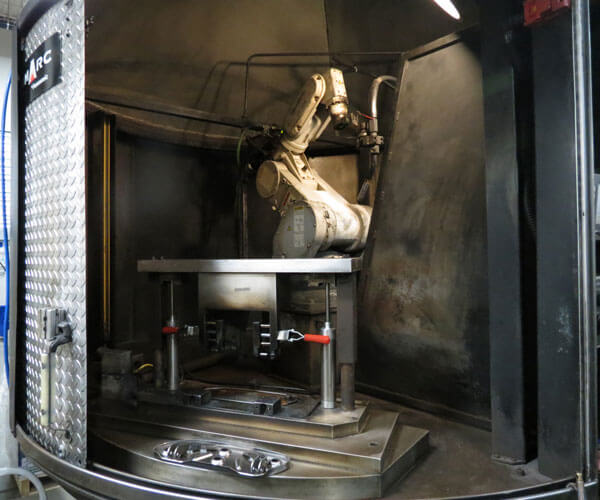
Each footboard required eight “1- inch” welds so Ultra designed and built a customized welding fixture. This established a stable location for the robotic arm to weld more consistently and at a faster rate.


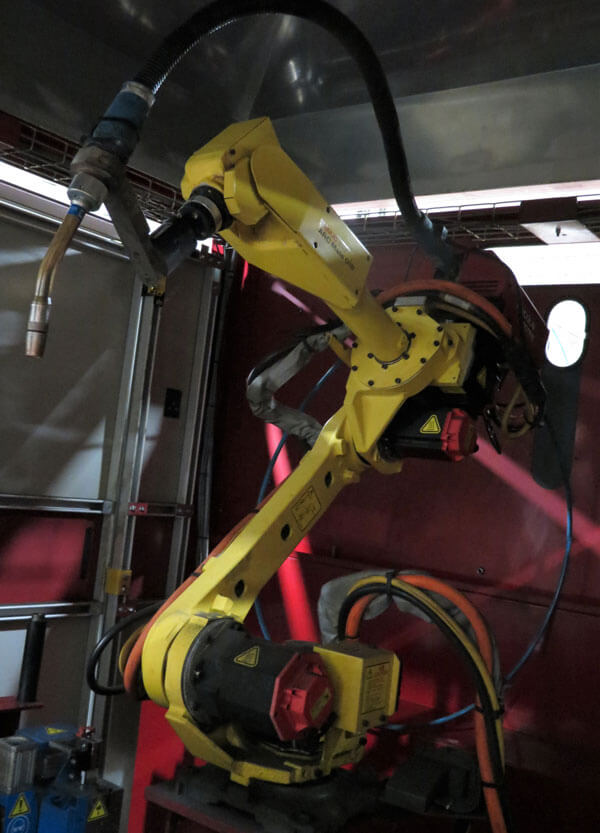
Robotic Welding Arm Second Robotic Welding Arm
And with two robotic welders, CNC Panasonic Robotic Welder and the Genesis Robotic Welder, Ultra can produce two footboards at a time – Decreasing downtimes and increasing production rates.


Customized functional gauge

A customized functional gauge designed and built at Ultra tests the placement of the welded hinges ensuring the footboard is ready for assembly.

In addition, the Metal Stamping of both footboards was completed at Ultra. Our Value-Added area completed this manufacturing process with visual inspections of the footboards.

Customer Outcome

Production rates were doubled and labor costs were decreased with the introduction of the robotic welder.
Precision and accuracy of the welding improved for a more secure fit onto the motorcycle.

Case Study: Delivering Cost-Savings for a Metal Stamped Part

Decomp

Customer

Automotive Manufacturer

Part

Decomp

Manufacturing Issues

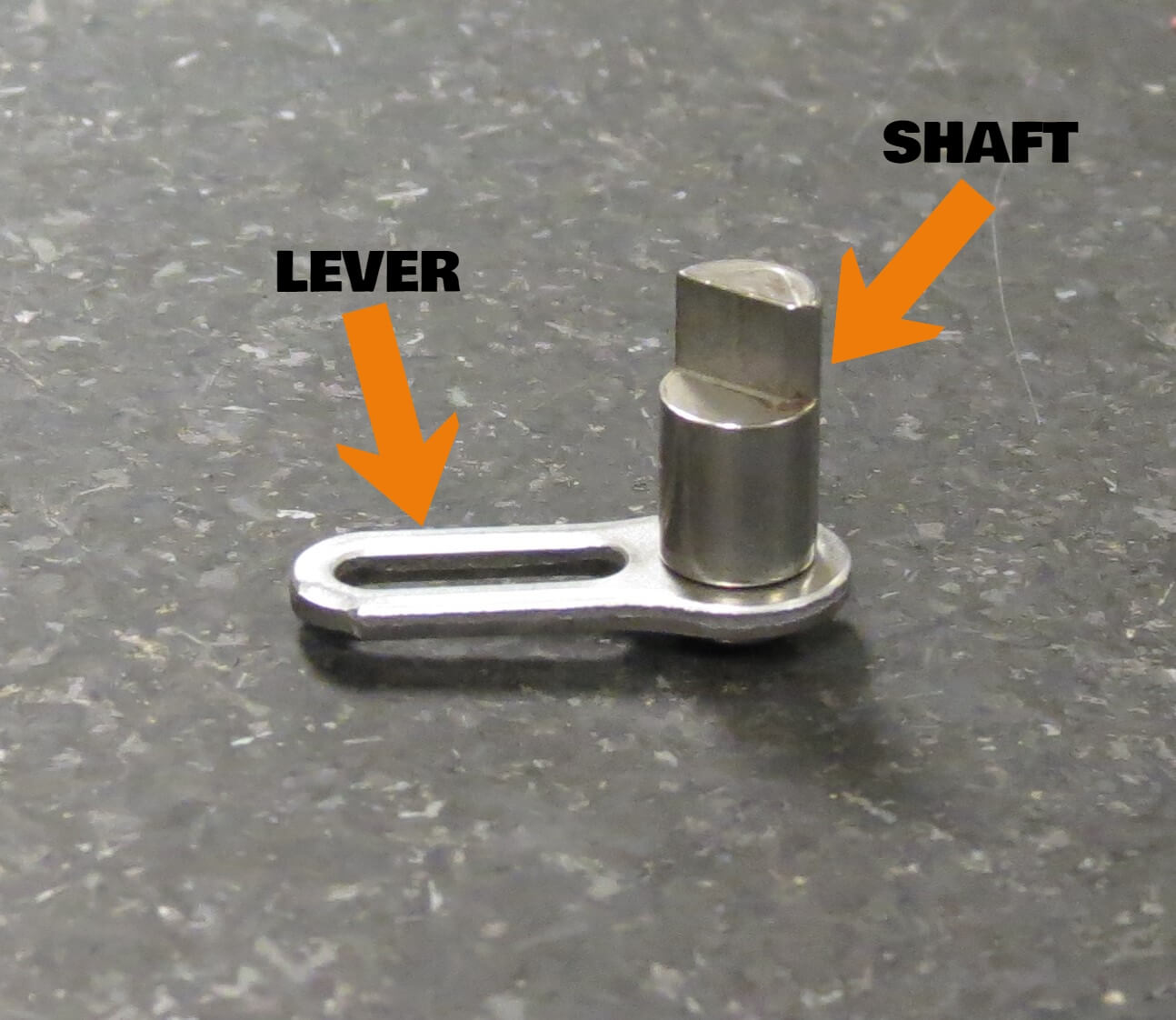
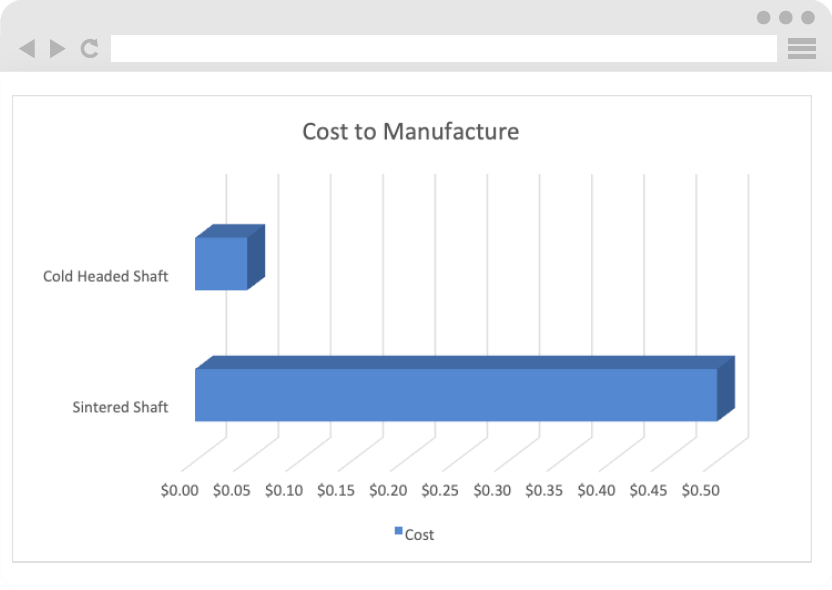
Costs and production times were rising for the shaft component of this part.

Assembly costs were rising to unacceptable levels and operations were inconsistent.

Customer’s Goal

Reduce the costs of the shaft piece and simplify the manufacturing process.

Minimize the assembly costs utilizing a more efficient method that meets quality and design standards.

Manufacturing Process

With the shaft addressed, Ultra turned to solving the assembly challenges. The most effective solution was to design and build a new progressive stamping die to assemble the part consistently and meet the customer’s production demands.

FIRST, the lever component is metal stamped in our Minster 100-ton press.
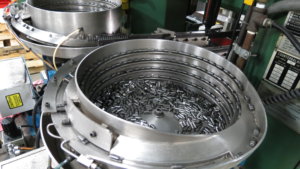
SECOND, the shaft and lever components are assembled. The bowl feeders, shown below, orient and feed the shaft components into the progressive die for assembly with the lever components.

Bowl feeders on the press were crucial in orienting and feeding the shafts into the progressive die

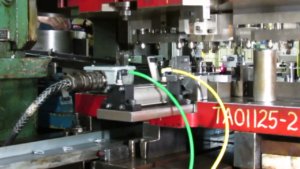
The progressive stamping die performing assembly of the shaft and lever components in the 100-ton press.

Customer Outcome

Experienced a 90% decrease in the cost of the shaft piece.

Lead times were improved with assembly operations now taking place in the stamping press.

Production increased to 4,800 parts per hour

90% decrease in the cost of the shaft piece